
What Is Market Capitalization, and Why Does It Matter?
Understanding a company’s size and value is crucial for investors making informed decisions. One key metric that provides insight into these aspects is market capitalization. Let’s delve into what market capitalization is, how it’s calculated, its classifications, and why it holds significance in the investment world.
What Is Market Capitalization?
Market capitalization, often referred to as “market cap,” represents the total value of a company’s outstanding shares of stock. It’s a straightforward metric that gives investors an estimate of a company’s size and market value.
Calculation of Market Capitalization:
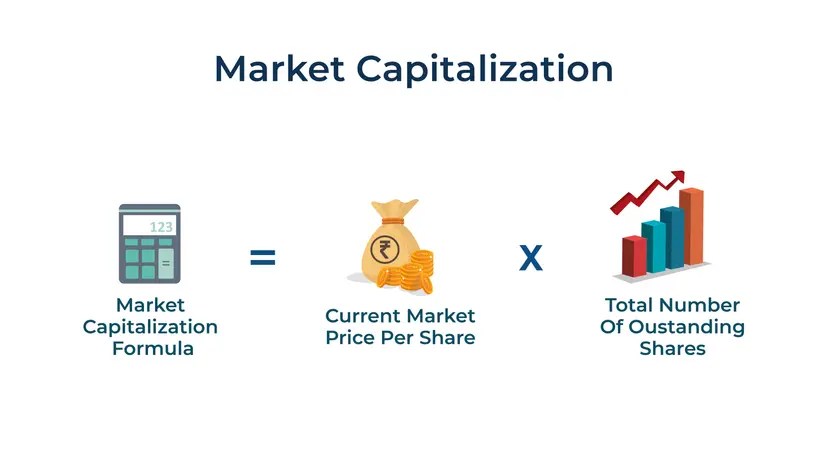
Market Capitalization=Share Price×Number of Outstanding SharesMarket Capitalization=Share Price×Number of Outstanding Shares
Example: If a company has 10 million shares outstanding, each priced at $50, its market capitalization would be: $50×10,000,000=$500,000,000$50×10,000,000=$500,000,000
Classifications Based on Market Capitalization
Companies are typically categorized into different groups based on their market capitalization:
- Large-Cap: Companies with a market cap of $10 billion or more. These are often established firms with a significant market presence.
- Mid-Cap: Companies with a market cap between $2 billion and $10 billion. They are usually in the process of expanding and have moderate risk profiles.
- Small-Cap: Companies with a market cap between $300 million and $2 billion. These firms may offer higher growth potential but come with increased risk.
- Micro-Cap: Companies with a market cap below $300 million. They are often newer or serve niche markets and can be highly volatile.
Why Does Market Capitalization Matter?
Understanding market capitalization is essential for several reasons:
- Assessing Company Size and Stability: Market cap provides a quick snapshot of a company’s size, which can be indicative of its stability and maturity. Larger companies (large-cap) are generally more stable, while smaller companies (small-cap and micro-cap) might offer higher growth potential but with increased volatility.
- Investment Strategy and Risk Assessment: Investors use market cap to align their portfolios with their risk tolerance and investment goals. For instance, a conservative investor might prefer large-cap stocks for their stability, whereas an aggressive investor might seek small-cap stocks for higher growth prospects.
- Index Composition: Market capitalization influences the weighting of companies in major stock indices, such as the S&P 500. Companies with larger market caps have more influence on the index’s performance.
- Valuation Insights: While market cap indicates the market’s valuation of a company, it doesn’t necessarily reflect its intrinsic value. Investors should consider other financial metrics and perform comprehensive analyses when making investment decisions.
Limitations of Market Capitalization
While market capitalization is a useful metric, it has its limitations:
- Not a Comprehensive Measure of Value: Market cap reflects the market’s perception but doesn’t account for factors like debt, cash reserves, or the company’s overall financial health.
- Market Volatility: Share prices, and consequently market cap, can be affected by short-term market fluctuations, which may not accurately represent a company’s long-term value.
Conclusion
Market capitalization is a fundamental metric that helps investors understand a company’s size and market value. By considering market cap alongside other financial indicators, investors can make more informed decisions and tailor their portfolios to align with their investment strategies and risk tolerance.
 Talking Finance .