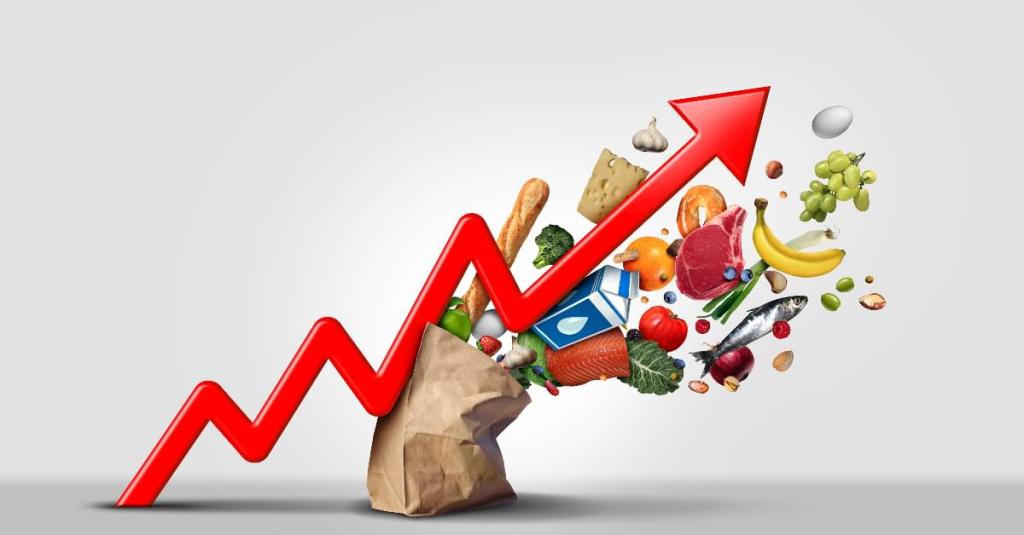
Economic terms like inflation, stagflation, and hyperinflation are often discussed in financial news and analyses.Understanding these concepts is crucial, as they have significant impacts on economies and individuals alike. This article explores these three phenomena, highlighting their definitions, causes, and effects.
Inflation
Definition:
Inflation refers to the general increase in prices of goods and services in an economy over a period of time, leading to a decrease in the purchasing power of money. It is typically measured by indices such as the Consumer Price Index (CPI) or the Producer Price Index (PPI).Invexi Consulting
Causes:
- Demand-Pull Inflation: Occurs when the demand for goods and services exceeds their supply, leading to price increases.
- Cost-Push Inflation: Happens when production costs rise (e.g., due to increased wages or raw material prices), prompting businesses to raise prices to maintain profit margins.
- Built-In Inflation: Also known as wage-price inflation, it arises when workers demand higher wages, leading to increased production costs and subsequently higher prices, creating a cycle of ongoing inflation.
Effects:
- Erodes Purchasing Power: As prices rise, the real value of money decreases, meaning consumers can afford fewer goods and services with the same amount of money.
- Income Redistribution: Inflation can disproportionately affect individuals on fixed incomes, as their purchasing power diminishes.
- Economic Uncertainty: High and unpredictable inflation can lead to uncertainty among businesses and consumers, potentially hindering investment and savings.
Stagflation
Definition:
Stagflation is characterized by the simultaneous occurrence of stagnant economic growth, high unemployment, and high inflation. This combination presents a dilemma for policymakers, as measures to address one aspect may exacerbate another.Reuters
Causes:
- Supply Shocks: Sudden increases in the cost of essential commodities (e.g., oil) can raise production costs across the economy, leading to inflation and reduced economic output.
- Poor Economic Policies: Policies that excessively expand the money supply or poorly manage fiscal resources can contribute to stagflation.
Effects:
- Reduced Consumer Spending: As unemployment rises and purchasing power declines, consumer spending typically decreases, further slowing economic growth.
- Policy Challenges: Traditional monetary tools become less effective, as stimulating growth may worsen inflation, while controlling inflation may suppress growth further.
Historical Context:
The 1970s in the United States serve as a notable example of stagflation, where oil price shocks led to high inflation and unemployment rates, coupled with stagnant economic growth. Investopedia
Hyperinflation
Definition:
Hyperinflation describes an extremely rapid and uncontrolled increase in prices, typically exceeding 50% per month. In such scenarios, the value of currency plummets, and normal economic functions can break down. Wall Street Prep+3Investopedia+3Corporate Finance Institute+3
Causes:
- Excessive Money Supply: Often results from a government printing money to finance expenditures, leading to an oversupply of currency.
- Loss of Confidence: When the public loses faith in a currency’s stability, they may rush to spend it or convert it to more stable assets, accelerating price increases.NetSuite+1Investopedia+1
Effects:
- Currency Collapse: Money may become virtually worthless, leading to a reliance on barter or alternative currencies.
- Economic Paralysis: Businesses struggle to set prices, and consumers rush to spend money before it further devalues, disrupting normal economic activities.
Historical Examples:
- Germany (1920s): Post-World War I reparations led to excessive money printing, resulting in extreme hyperinflation.
- Zimbabwe (2000s): Land reform policies and economic mismanagement led to hyperinflation, with prices doubling rapidly. de.wikipedia.org
Comparative Overview
| Aspect | Inflation | Stagflation | Hyperinflation |
|---|---|---|---|
| Definition | General rise in prices | Combination of high inflation, stagnant growth, and high unemployment | Extremely rapid and uncontrolled price increases |
| Causes | Demand-pull, cost-push, built-in factors | Supply shocks, poor economic policies | Excessive money supply, loss of confidence |
| Effects | Reduced purchasing power, income redistribution, economic uncertainty | Reduced consumer spending, policy challenges | Currency collapse, economic paralysis |
| Historical Examples | Moderate inflation in various economies | U.S. in the 1970s | Germany in the 1920s, Zimbabwe in the 2000s |
Understanding the distinctions between inflation, stagflation, and hyperinflation is vital for grasping economic dynamics and their potential impacts on daily life. While inflation is a common economic phenomenon, stagflation and hyperinflation represent more severe and complex challenges that require careful policy responses to navigate effectively.
 Talking Finance .