
When it comes to investing, one of the key decisions is choosing between growth stocks and value stocks. Both strategies offer unique benefits and risks, and understanding their differences can help you make informed investment decisions.
Understanding Growth vs. Value Stocks
Growth stocks belong to companies expected to expand faster than the overall market. These companies often reinvest profits into innovation and expansion rather than paying dividends. They tend to be found in sectors like technology and consumer discretionary.
Value stocks, on the other hand, belong to well-established companies that appear undervalued compared to their intrinsic worth. These companies typically have stable earnings, lower price-to-earnings (P/E) ratios, and often pay dividends.
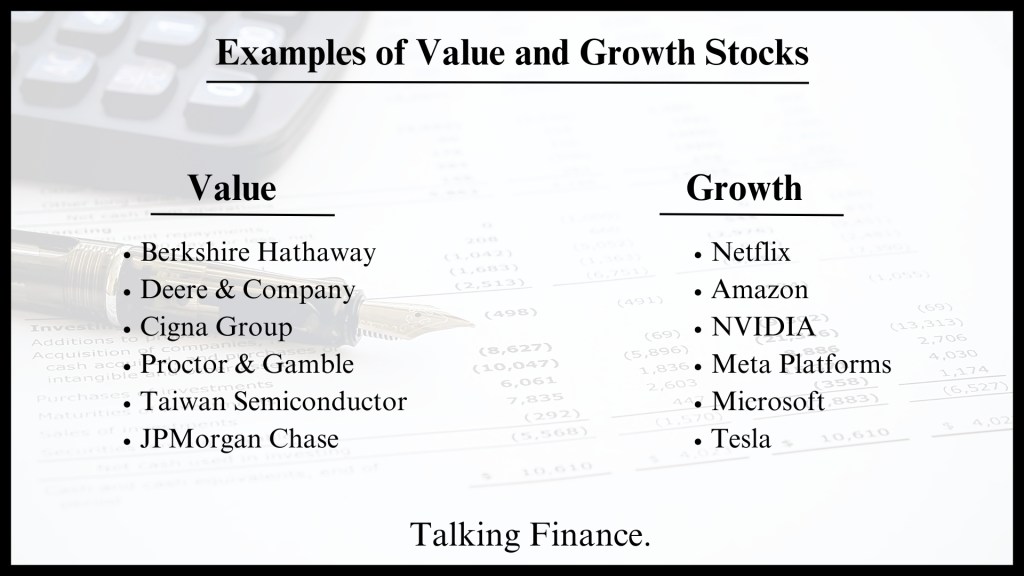
This chart shows which industries typically classify as growth or value stocks.
Growth Stocks: High Risk, High Reward
Growth stocks tend to perform well during strong economic periods when investors are more willing to take risks. They offer high potential returns but are also more volatile, meaning they can experience significant price swings.
Key Characteristics of Growth Stocks
- Higher P/E ratios due to expected future earnings growth
- Little to no dividend payouts, as profits are reinvested
- Higher volatility, leading to greater potential for gains and losses
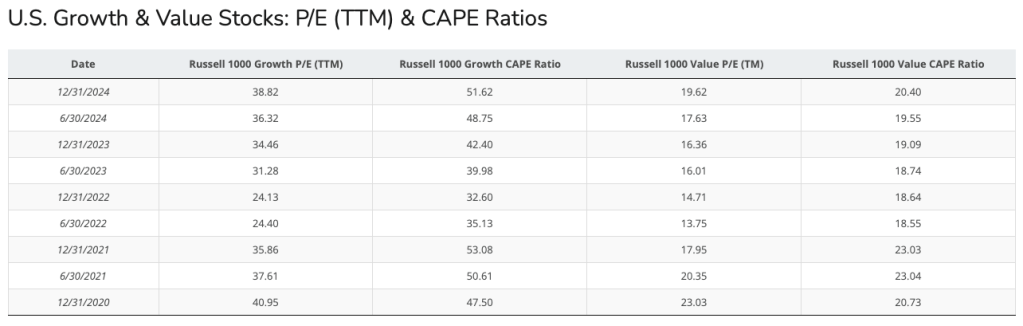
P/E Ratio Comparison Between Growth and Value Stocks
Growth stocks tend to have higher P/E ratios as investors are willing to pay a premium for future growth potential.
Value Stocks: Stability and Long-Term Potential
Value stocks generally perform better during economic downturns and times of market uncertainty. Investors look for these stocks when they seek less risk and steady returns over time.
Key Characteristics of Value Stocks
- Lower P/E ratios, meaning they trade at a discount
- Often provide dividend payments, offering a consistent income stream
- Less volatility, making them a safer choice in uncertain markets
Performance Comparison: Which One Wins?
Over time, growth stocks have delivered higher returns, particularly during economic expansions. However, value stocks tend to outperform during recessions due to their stability.
For example, value stocks outperformed after the Dot-Com Crash, while growth stocks led the market in the tech boom of the 2020s.
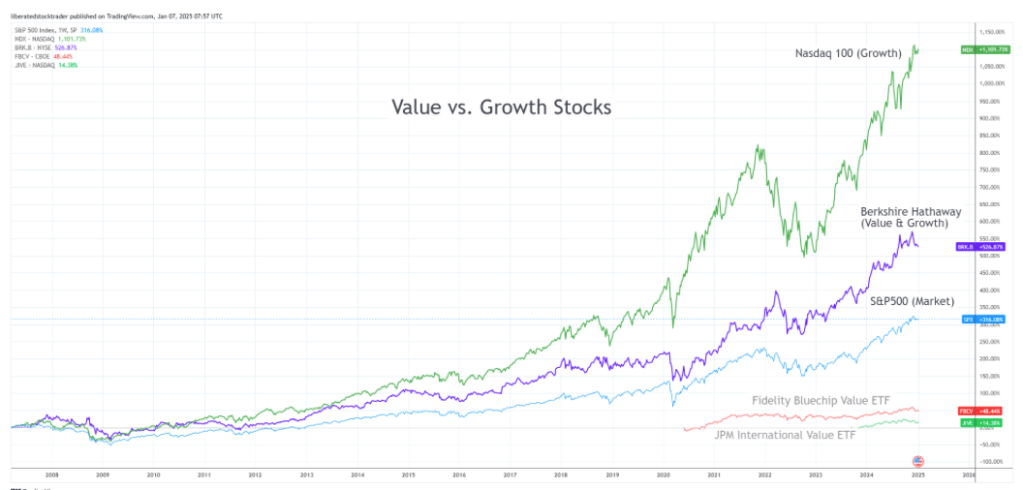
Historical Performance of Growth vs. Value Stocks
This graph shows how growth and value stocks have performed over different market cycles.
Which One Should You Choose?
The right choice depends on your investment strategy and risk tolerance:
- If you seek high returns and can handle volatility, growth stocks may be a better fit.
- If you prefer stability and consistent dividends, value stocks are a stronger choice.
- A balanced approach with both growth and value stocks can reduce risk while maximizing returns.
Conclusion
Both growth and value stocks play an important role in a well-diversified portfolio. Growth stocks offer the potential for higher returns but come with increased risk, while value stocks provide stability and steady income. The best investment strategy depends on your financial goals and market outlook.
By understanding the differences between these two investing approaches, you can make more informed decisions and build a portfolio that suits your needs.
 Talking Finance .