• Growth vs. Value Stocks: Which Should You Invest In?

    When it comes to investing, one of the key decisions is choosing between growth stocks and value stocks. Both strategies offer unique benefits and risks, and understanding their differences can help you make informed investment decisions.


    Understanding Growth vs. Value Stocks


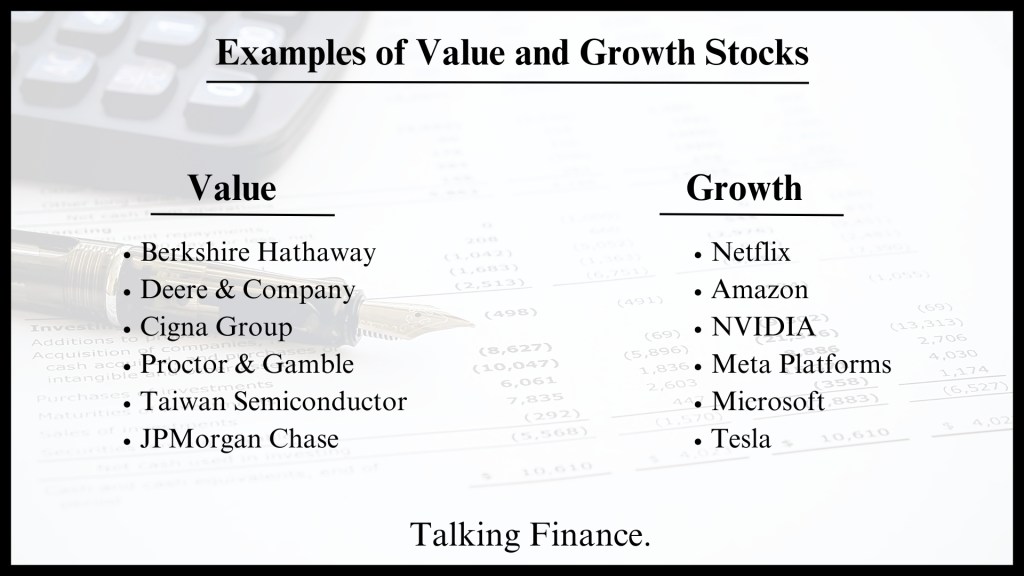
    Growth stocks belong to companies expected to expand faster than the overall market. These companies often reinvest profits into innovation and expansion rather than paying dividends. They tend to be found in sectors like technology and consumer discretionary.

    Value stocks, on the other hand, belong to well-established companies that appear undervalued compared to their intrinsic worth. These companies typically have stable earnings, lower price-to-earnings (P/E) ratios, and often pay dividends.

    This chart shows which industries typically classify as growth or value stocks.


    Growth Stocks: High Risk, High Reward


    Growth stocks tend to perform well during strong economic periods when investors are more willing to take risks. They offer high potential returns but are also more volatile, meaning they can experience significant price swings.

    Key Characteristics of Growth Stocks

    • Higher P/E ratios due to expected future earnings growth
    • Little to no dividend payouts, as profits are reinvested
    • Higher volatility, leading to greater potential for gains and losses

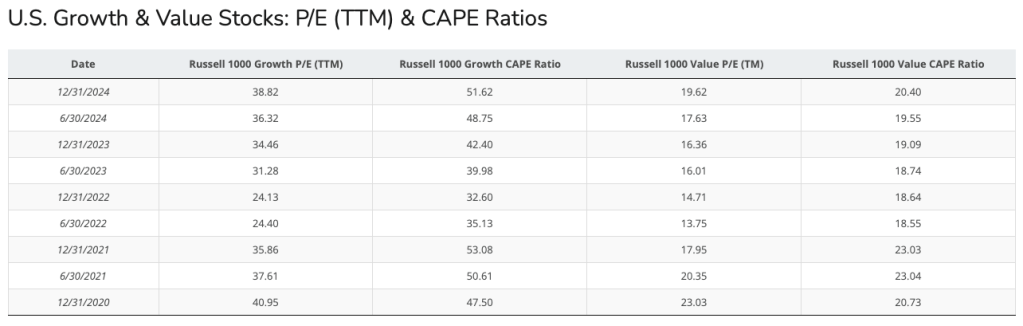
    P/E Ratio Comparison Between Growth and Value Stocks
    Growth stocks tend to have higher P/E ratios as investors are willing to pay a premium for future growth potential.


    Value Stocks: Stability and Long-Term Potential


    Value stocks generally perform better during economic downturns and times of market uncertainty. Investors look for these stocks when they seek less risk and steady returns over time.

    Key Characteristics of Value Stocks

    • Lower P/E ratios, meaning they trade at a discount
    • Often provide dividend payments, offering a consistent income stream
    • Less volatility, making them a safer choice in uncertain markets

    Performance Comparison: Which One Wins?


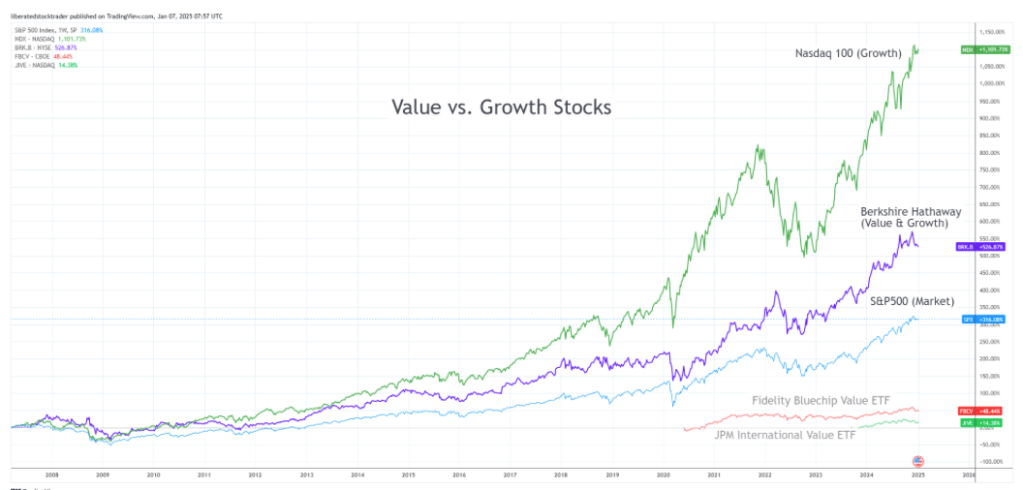
    Over time, growth stocks have delivered higher returns, particularly during economic expansions. However, value stocks tend to outperform during recessions due to their stability.

    For example, value stocks outperformed after the Dot-Com Crash, while growth stocks led the market in the tech boom of the 2020s.

    Historical Performance of Growth vs. Value Stocks
    This graph shows how growth and value stocks have performed over different market cycles.


    Which One Should You Choose?


    The right choice depends on your investment strategy and risk tolerance:

    • If you seek high returns and can handle volatility, growth stocks may be a better fit.
    • If you prefer stability and consistent dividends, value stocks are a stronger choice.
    • A balanced approach with both growth and value stocks can reduce risk while maximizing returns.

    Conclusion


    Both growth and value stocks play an important role in a well-diversified portfolio. Growth stocks offer the potential for higher returns but come with increased risk, while value stocks provide stability and steady income. The best investment strategy depends on your financial goals and market outlook.

    By understanding the differences between these two investing approaches, you can make more informed decisions and build a portfolio that suits your needs.

  • Crypto vs. Stocks: Where Should You Invest?

    When it comes to investing, the age-old debate between stocks and cryptocurrencies often arises. Both offer distinct opportunities and come with their own set of challenges. To help you decide where to allocate your funds, let’s first explore the world of stocks, backed by real examples, and then dive into the world of cryptocurrencies.


    Stock Market Overview: Real Examples of Gains and Losses

    Investing in stocks means owning a small piece of a company. The stock market has long been a trusted way for people to build wealth. While stocks can be volatile, they are generally considered a safer bet compared to cryptocurrencies due to regulation and market stability.

    To understand how stocks perform, let’s look at two examples of stocks that have had significant movements over the past one year.

    Stock Gaining in the Last 6 Months:

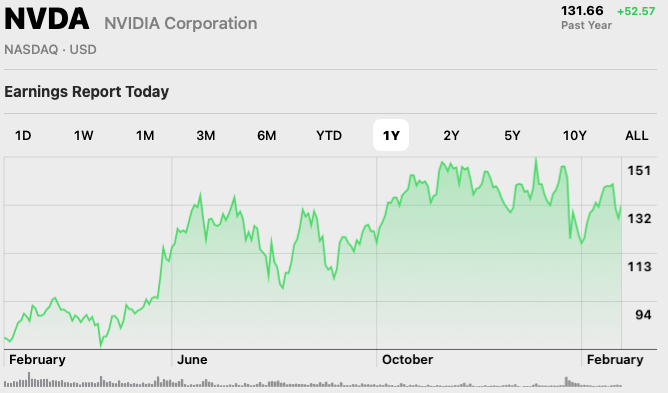
    Nvidia Corporation (NVDA):

    • Performance: Over the past year, Nvidia’s stock has increased from approximately $77 in February 2024 to $132in February 2025.
    • Percentage Increase: This marks a gain of around 71.43% during this time.

    Why Nvidia Went Up:

    1. Strong Earnings and Growth Potential: Nvidia has been a key player in the booming artificial intelligence (AI) sector. As demand for AI technology surges, Nvidia’s GPUs (graphics processing units) have become essential, leading to impressive revenue growth and surpassing market expectations.
    2. AI Boom: Nvidia’s role in the AI space has positioned it for strong future growth. With more companies relying on Nvidia’s hardware for AI training, their stock has benefitted from this increased demand.
    3. Positive Market Sentiment: Investor confidence in Nvidia is also a result of its consistent innovation and solid performance in gaming and AI markets.

    Stock Declining in the Last Year :

    Ford Motor Company (F):

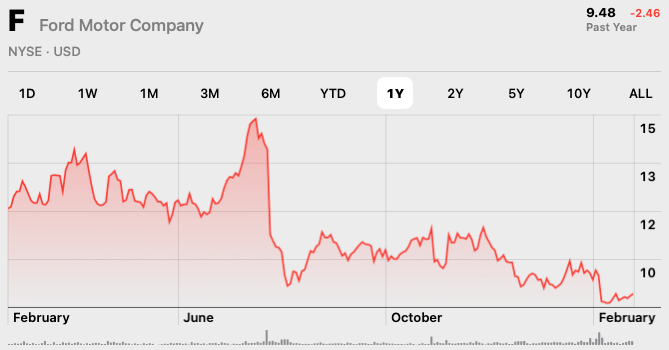
    • Performance: Over the past year, Ford’s stock has dropped from around $12 in February 2024 to around $9 in February 2025.
    • Percentage Decrease: This represents a decline of approximately -25% over this period.

    Why Ford Went Down:

    1. Supply Chain Issues: Ford, like many other automakers, has faced ongoing issues with the global chip shortage, significantly hindering its production capacity.
    2. Rising Raw Material Costs: The cost of essential materials like steel and aluminum has increased, squeezing profit margins for companies like Ford.
    3. Competition in the EV Market: While Ford has made strides in the electric vehicle (EV) market, it is still playing catch-up to companies like Tesla and is struggling to capture significant market share.

    The World of Cryptocurrencies

    Now that we’ve explored stock performance, let’s dive into the world of cryptocurrencies. Cryptocurrencies like Bitcoin, Ethereum, and many others offer a decentralized alternative to traditional stocks, and while they come with higher risk, they also present the potential for massive rewards.

    Key Characteristics of Cryptocurrencies:

    • Decentralization: Unlike stocks, cryptocurrencies are not controlled by any central authority, which means they aren’t subject to government or institutional control.
    • Volatility: Cryptocurrencies are known for their high volatility. Prices can fluctuate dramatically, offering opportunities for large gains—and equally large losses.
    • 24/7 Market: The cryptocurrency market operates around the clock, unlike traditional stock markets that have set trading hours.

    Crypto Performance: Recent Trends (1-Year Timeframe)

    As of February 2025, let’s look at how Bitcoin (BTC) is performing compared to the SPDR S&P 500 ETF Trust (SPY), which tracks the overall stock market.

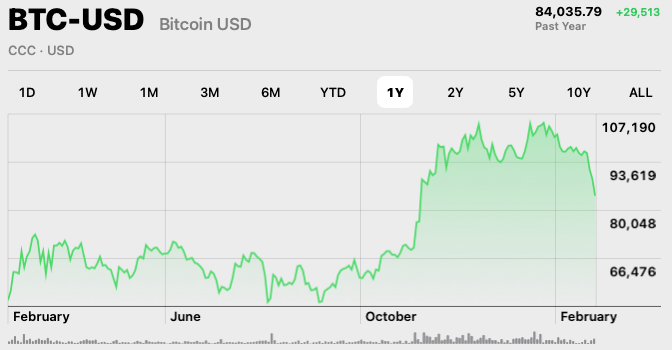
    • Bitcoin (BTC): Over the last year, Bitcoin gone from about $54,000 in February 2024 to $83,019in February 2025, reflecting an increase of approximately 55.59%.

    Bitcoin has risen about 55.59% from $54,000 in February 2024 to $83,019 in February 2025, highlighting the potential for gains in crypto. However, its volatility also means higher risk compared to traditional investments.


      Comparing Stock and Crypto Performance Over the Past Six Months

      Stocks: Nvidia (NVDA) and Ford (F) have shown very different trends. Nvidia has soared due to the rising demand for AI and GPUs, while Ford’s stock has struggled due to concerns over supply chain issues, rising raw material costs, and competition in the EV market.

      Cryptocurrencies: Bitcoin (BTC), on the other hand, remains highly volatile. While it has experienced significant growth, it also faces unpredictable swings. Cryptocurrencies like Bitcoin can be riskier than stocks due to their volatility, with prices fluctuating based on market sentiment and external factors.


      Making the Right Choice: Stocks or Cryptocurrencies?

      Choosing between stocks and cryptocurrencies depends on your financial goals, risk tolerance, and investment strategy. Here’s how to decide:

      • Risk Tolerance: Cryptocurrencies are riskier than stocks due to their extreme volatility. If you are uncomfortable with large fluctuations in value, stocks might be a better option for you. However, if you’re comfortable with high risk for the potential of higher rewards, cryptocurrencies could be worth considering.
      • Investment Horizon: If you are looking for a stable, long-term investment, stocks might be more suited to your goals. Stocks have a proven track record of delivering consistent returns over time. Cryptocurrencies are more suited for those with a shorter-term investment outlook or those seeking to capitalize on volatile markets.
      • Diversification: A balanced portfolio can include both stocks and cryptocurrencies. Having a mix of traditional and alternative investments helps mitigate risks and allows you to take advantage of different market conditions.

      Conclusion

      Both stocks and cryptocurrencies present unique investment opportunities with distinct advantages and risks. While stocks, like Nvidia, provide stability and potential for growth, cryptocurrencies offer the allure of rapid gains—albeit with greater risk. Whether you choose to invest in stocks, cryptocurrencies, or a combination of both depends on your financial goals, risk appetite, and investment strategy.

    • Living on a Budget Without Sacrificing Fun

      Have you ever felt like budgeting means saying goodbye to fun? Like every dollar has to go toward bills, savings, or other essentials, leaving no room for the things that make life enjoyable? Many people avoid budgeting because they think it’s restrictive, but in reality, a good budget gives you the freedom to enjoy life without financial stress.

      Living on a budget doesn’t mean cutting out everything fun—it just means being intentional with your spending. You can still travel, dine out, and enjoy entertainment while managing your money wisely. Let’s explore how you can balance financial responsibility with a lifestyle you love.


      Why Budgeting Matters

      A budget is more than just a plan—it’s a tool that helps you take control of your money. Without a budget, it’s easy to overspend on small things without realizing where your money is going. Ever checked your bank account and wondered, Where did all my money go? That’s what happens when you spend without a plan.

      The key to a successful budget is balance. If you cut out all entertainment and personal spending, you might stick to your budget for a while, but eventually, you’ll feel deprived and start overspending. The goal is to manage your money in a way that allows you to cover necessities, save for the future, and still have fun along the way.


      The 50/30/20 Rule – A Simple Budgeting Plan

      One of the best ways to budget while still allowing for fun is the 50/30/20 rule. This simple formula helps you divide your income into three categories:

      • 50% for Needs – Rent, groceries, utilities, transportation, insurance, and minimum debt payments.
      • 30% for Wants – Dining out, entertainment, travel, hobbies, shopping, and non-essential spending.
      • 20% for Savings and Debt Repayment – Emergency fund, retirement contributions, and paying off extra debt.

      This approach ensures that you’re being responsible with your finances while still leaving space for enjoyment. If you’re in a tough financial situation, you might need to adjust these percentages, but the important thing is to always dedicate something to fun—even if it’s small.


      Finding Free and Affordable Fun

      Having fun doesn’t have to mean spending a fortune. There are countless ways to enjoy yourself without breaking the bank:

      • Free community events – Many cities offer free outdoor concerts, festivals, and movie nights. Check local event calendars to see what’s happening near you.
      • Game nights or potlucks – Instead of going out to eat, invite friends over for a fun night in. A home-cooked meal and a good board game can be just as entertaining as an expensive night out.
      • Discount days – Many museums, theaters, and amusement parks have discounted days or student/senior discounts. Take advantage of these deals whenever possible.
      • Outdoor activities – Hiking, biking, swimming, and camping are all low-cost or free ways to enjoy time with family and friends.

      Shifting your mindset about entertainment can make a huge difference. Fun isn’t about how much money you spend—it’s about the experiences you create.


      Smart Spending on Entertainment

      If you love going out, traveling, or dining at restaurants, you don’t have to give it up entirely. Instead, find ways to cut costs while still enjoying your favorite activities:

      • Use coupons and discount apps – Websites like Groupon and Honey offer discounts on restaurants, events, and activities. Before making any purchase, check for available deals.
      • Choose happy hours and lunch specials – Eating out doesn’t have to be expensive. Many restaurants offer happy hour deals or cheaper lunch menus that can help you save money.
      • Limit subscription services – Do you really need five different streaming platforms? Cut down on unused subscriptions to free up extra cash for other fun activities.
      • Plan vacations wisely – Travel can be affordable if you plan ahead. Look for flight deals, travel during off-peak seasons, and stay in budget-friendly accommodations like Airbnb or hostels.

      By being mindful of your spending, you can still enjoy entertainment without hurting your finances.


      Avoiding Lifestyle Inflation

      One of the biggest budgeting mistakes people make is lifestyle inflation—spending more just because they earn more. It’s easy to fall into this trap. You get a raise, so you upgrade your apartment, buy a nicer car, and start dining at fancier restaurants. Before you know it, your expenses have grown just as fast as your income, leaving little room for savings.

      Instead, when you get extra income, increase your savings and debt payments first. Then, decide how much to add to your fun budget. This way, you’re still enjoying your money while also securing your financial future.


      Creating a “Fun Fund”

      One of the best ways to ensure you can enjoy life while sticking to your budget is by setting up a “fun fund.” This is a separate savings account or budget category dedicated to entertainment and experiences. By setting aside a small amount of money each paycheck, you can enjoy guilt-free fun without worrying about overspending.

      You can also try:

      • The envelope system – Withdraw a set amount of cash for fun activities each month. Once it’s gone, you wait until the next month to spend again.
      • Side hustles for fun money – If your current income doesn’t allow for much fun spending, consider picking up a side hustle like freelancing, pet-sitting, or selling items online. Use that extra cash exclusively for entertainment and travel.

      Having a dedicated fun fund ensures that you can enjoy experiences without feeling guilty or dipping into your essential expenses.


      Why This Matters to You

      Living on a budget doesn’t mean living a boring life. It means being intentional with your money so you can enjoy life without financial stress. By planning your spending, cutting unnecessary costs, and finding creative ways to have fun, you can live a fulfilling life while still working toward financial stability.

    • Money Mindset & Psychology

      Or maybe you’ve caught yourself thinking, “I’ll never be rich,” or “Money is the root of all evil.” These thoughts are more than just passing ideas—they’re part of your money mindset, which influences how you earn, spend, and save. By understanding the psychology behind your financial habits, you can change the way you handle money and improve your financial future.


      Why Your Money Mindset Matters

      Your money mindset is simply how you think and feel about money. It shapes your financial choices every day, from how much you save to whether you invest or spend impulsively. If you believe that money is hard to get or that you’ll never be wealthy, you might subconsciously make choices that keep you stuck financially.

      The good news? You can change your money mindset. When you start seeing money as a tool that helps you live the life you want, you begin making better financial decisions. It’s all about shifting your perspective from seeing money as a limitation to seeing it as an opportunity.


      Scarcity vs. Abundance Mindset

      There are two main types of money mindsets: scarcity and abundance.

      • Scarcity Mindset: This is the belief that money is limited. You might constantly worry about running out of money or feel guilty about spending. This mindset often leads to fear-based decisions, like avoiding investments or saving too much without enjoying life.
      • Abundance Mindset: This is the belief that money is plentiful and that you can always find ways to earn more. People with an abundance mindset see opportunities everywhere and feel confident about spending, saving, and investing wisely.

      Changing from a scarcity to an abundance mindset doesn’t mean ignoring financial risks. It’s about believing that you have the power to improve your financial situation through smart decisions and hard work.


      The Psychology of Spending

      Have you ever bought something on impulse and later wondered why you did it? Spending isn’t just about numbers; it’s emotional. Sometimes we shop because we’re stressed, bored, or even celebrating. Marketers know this and use tactics like flash sales and “limited-time offers” to make us buy without thinking.

      To control impulse spending:

      • Pause Before Buying: Wait 24 hours before making a non-essential purchase. This helps you decide if you really need it.
      • Use Cash Instead of Cards: Paying with cash feels more real, making you think twice before spending.

      By understanding why you spend, you can make more thoughtful decisions and avoid buyer’s remorse.


      Breaking Limiting Beliefs

      Many people have negative beliefs about money without even realizing it. These beliefs often come from childhood experiences or cultural influences, like thinking “Money is evil” or “I’ll never be rich.” Such thoughts can hold you back from achieving financial success.

      To change this, start by noticing your beliefs about money. Are they helping or hurting you? Replace negative thoughts with positive ones, like “Money is a tool for freedom” or “I am capable of earning more.” By changing how you think, you can change how you handle money.


      Visualizing Financial Success

      Visualization is a powerful tool that helps you achieve your financial goals. By clearly imagining your desired lifestyle—like your dream home or being debt-free—you train your brain to focus on those goals. The more detailed and vivid your vision, the more motivated you’ll be to take action.

      Create a vision board with pictures and quotes that represent your financial dreams. Look at it daily to remind yourself of what you’re working towards. Visualization isn’t magic, but it keeps your goals top of mind, guiding your actions toward achieving them.


      Overcoming Money Anxiety

      Money is a common source of stress. If you feel anxious just thinking about bills or savings, you’re not alone. This anxiety often comes from fear of not having enough or making financial mistakes.

      The best way to overcome money anxiety is to face it head-on. Set a regular “money check-in” to review your finances. Knowledge reduces fear. If you’re feeling overwhelmed, consider talking to a financial advisor or a therapist who understands financial stress.


      Why This Matters to You

      Your mindset affects every financial decision you make. If you believe that you’re bad with money or that you’ll never get ahead, you’re more likely to make poor financial choices. But if you believe in your ability to improve your financial situation, you’ll find ways to do it.

      By understanding your money mindset and the psychology behind your financial habits, you can take control of your financial future. It’s not just about earning more or spending less—it’s about changing how you think about money.

    • Mastering Budgeting and Saving

      Have you ever checked your bank account at the end of the month and wondered where all your money went? Have you ever been curious about how some people seem to save effortlessly while others struggle just to get by? Well, if so, you’re in the right place. If not, budgeting and saving are two of the most essential skills in personal finance, and understanding them can change your financial future. Let’s dive in.


      Why Budgeting Matters

      At its core, a budget is simply a plan for your money. It ensures that you’re spending within your means, saving for future goals, and avoiding unnecessary financial stress. Some people think of budgeting as restrictive, but in reality, it’s about financial freedom—it gives you control over your money instead of letting your money control you.

      A well-structured budget considers three major factors: your income, your expenses, and your savings. Your income is everything you earn from your job, side hustles, or passive income. Your expenses are all the things you spend money on, from rent and groceries to entertainment and online subscriptions. Finally, savings include your emergency fund, retirement contributions, and any investments. The key is to create a balance—cover your needs, enjoy some of your wants, and make sure you’re setting aside money for the future.


      The Struggle to Save

      If saving money feels impossible, you’re not alone. One of the biggest obstacles is spending first and saving whatever is left over—often leading to nothing being saved at all. Another challenge is lifestyle inflation. As people earn more, they tend to spend more, upgrading their homes, cars, and wardrobes instead of increasing their savings. While there’s nothing wrong with treating yourself, unchecked lifestyle inflation can keep you stuck in a cycle of living paycheck to paycheck.

      The best way to ensure you’re saving consistently? Pay yourself first. Instead of saving whatever is left at the end of the month, make saving a priority. Set aside a portion of your income before you even think about spending. This simple shift can make a huge difference in how much you save over time.


      The 50/30/20 Rule

      One of the most effective budgeting strategies is the 50/30/20 rule, a method made popular by Senator Elizabeth Warren. The idea is simple:

      • 50% of your income goes to needs—things like rent, groceries, utilities, insurance, and minimum debt payments.
      • 30% is allocated to wants—dining out, entertainment, shopping, and vacations.
      • 20% is dedicated to savings and debt repayment—emergency funds, retirement contributions, and extra payments on loans.

      This system is great because it provides structure without being overly restrictive. It ensures your essentials are covered while still allowing room for fun and financial growth.


      The Psychology of Spending

      Have you ever made an impulse purchase and regretted it later? Marketers know how to tap into our emotions, using tactics like flash sales, limited-time offers, and “buy now, pay later” options to make us spend without thinking. Understanding the psychology of spending can help you take back control.

      One simple trick is the 24-hour rule—whenever you feel the urge to buy something non-essential, wait 24 hours before making the purchase. More often than not, you’ll realize you don’t actually need it. Another great strategy is using cash instead of credit cards. Studies show that people tend to spend less when using cash because there’s a tangible loss of money. Small changes like these can help curb impulse spending and keep your budget on track.


      Building an Emergency Fund

      If there’s one savings goal everyone should prioritize, it’s an emergency fund. Life is unpredictable—cars break down, medical expenses arise, and sometimes jobs are lost. An emergency fund acts as a financial cushion, preventing unexpected expenses from turning into debt.

      Experts recommend saving three to six months’ worth of essential expenses in an easily accessible account. If that sounds overwhelming, start small. Even putting away $10 or $20 a week can add up over time. To make it easier, set up an automatic transfer to your savings account every payday. Treat it like a non-negotiable bill, and you’ll be surprised at how quickly your emergency fund grows.


      Small Changes, Big Savings

      When it comes to saving money, small changes can make a big difference. Cutting back on unnecessary expenses—like unused subscriptions or frequent takeout—can free up extra cash for savings. Using round-up savings apps, which automatically round up your purchases and deposit the spare change into savings, is another effortless way to build wealth over time.

      Another great strategy is the no-spend challenge. Set a time frame—maybe a week or a month—where you commit to only spending on essentials. It’s a great way to reset your spending habits and see just how much you can save when you cut out unnecessary purchases.


      Why This Matters to You

      Whether you’re saving for a dream vacation, working toward early retirement, or just trying to get a handle on your finances, budgeting and saving are the foundation of financial security. When you take control of your money, you’re giving yourself more freedom—freedom to make choices based on what you truly want, rather than what your bank balance dictates.

      Now you know the basics of budgeting and saving! You’ve just taken a huge step toward mastering your finances. Whether you stick to a simple budget or dive into more advanced money management strategies, remember this: every dollar saved is a step closer to financial freedom.

      If you ever wonder where your money went, know that you have the power to decide where it goes instead.

    • What Should I Look for When Choosing a Bank?

      Choosing the right bank is an important decision that can significantly impact your financial health and convenience. Whether you’re opening your first account or considering switching banks, it’s essential to evaluate your options carefully. Banks differ in the services they provide, fees they charge, and benefits they offer, so knowing what to look for will help you make a smart choice. Let’s break down the key factors to consider when selecting a bank that fits your financial needs.


      Types of Banks to Consider

      Before diving into specific features, it’s helpful to know the different types of banks available:

      • Traditional Banks: These offer physical branch locations and a wide range of services, including checking and savings accounts, loans, and investment options.
      • Online Banks: Fully digital banks typically offer lower fees and higher interest rates on savings but lack in-person services.
      • Credit Unions: Member-owned institutions that often provide better rates and personalized customer service.
      • Neobanks: Digital-only platforms that focus on modern banking solutions, such as mobile apps and fee-free accounts.

      Key Features to Evaluate

      1. Account Options and Features

      Look for a bank that offers the types of accounts you need, such as:

      • Checking Accounts: For everyday transactions.
      • Savings Accounts: For building an emergency fund or saving for specific goals.
      • Certificates of Deposit (CDs): For long-term savings with fixed interest rates.
      • Money Market Accounts: For higher interest rates and limited check-writing capabilities.

      Make sure the accounts come with features that suit your lifestyle, such as debit cards, direct deposit, and mobile check deposit.


      2. Fees and Charges

      Understanding a bank’s fee structure is crucial. Common fees to watch out for include:

      • Monthly Maintenance Fees: Look for banks that waive these fees if you meet certain criteria, such as maintaining a minimum balance.
      • ATM Fees: Check if the bank offers free access to a network of ATMs.
      • Overdraft Fees: Some banks provide overdraft protection or lower fees.
      • Foreign Transaction Fees: Important if you travel internationally or make online purchases from foreign vendors.

      3. Interest Rates

      If earning interest on your savings is a priority, compare the interest rates offered by different banks. Online banks and credit unions often provide higher rates than traditional banks.


      4. Digital Banking Experience

      In today’s fast-paced world, having access to robust digital banking services is essential. Look for features such as:

      • Mobile App: User-friendly and secure with essential functions like bill pay, money transfers, and mobile check deposit.
      • Online Banking: A comprehensive web platform to manage your accounts.
      • Alerts and Notifications: Customizable alerts for account activity and balances.

      5. Customer Service

      Good customer service can make a big difference, especially during financial emergencies. Consider:

      • Branch Access: If you prefer face-to-face interactions, choose a bank with convenient branch locations.
      • 24/7 Support: Look for banks that offer round-the-clock customer service via phone, chat, or email.
      • Reputation: Read reviews and ask for recommendations to gauge customer satisfaction.

      6. Security Features

      Protecting your money and personal information should be a top priority. Look for banks that offer:

      • FDIC or NCUA Insurance: Ensures your deposits are protected up to $250,000.
      • Fraud Monitoring: Real-time alerts and fraud prevention tools.
      • Two-Factor Authentication (2FA): An extra layer of security for online accounts.

      7. Accessibility and Convenience

      Think about how easily you can access your money and banking services:

      • ATM Network: A wide network of fee-free ATMs.
      • Branch Locations: Convenient for those who prefer in-person banking.
      • Extended Hours: Some banks offer evening or weekend hours.

      8. Special Perks and Rewards

      Some banks offer additional benefits, such as:

      • Cash Back Rewards: On debit card purchases.
      • Sign-Up Bonuses: For opening a new account and meeting certain criteria.
      • Loyalty Programs: Higher interest rates for long-term customers.

      Examples of Banks in NYC

      If you’re in New York City, here are some banks worth considering:

      • Chase Bank: With numerous branches and ATMs throughout the city, Chase offers a variety of checking and savings accounts, credit cards, and lending options.
      • Bank of America: Known for its extensive branch network and robust digital banking services.
      • Citibank: Offers a wide range of financial products and services, including global ATM access.
      • HSBC: Ideal for those who need international banking solutions.
      • Capital One: Provides a tech-forward experience with fee-free checking and competitive savings accounts.
      • Apple Bank for Savings: A regional bank with a long history of serving New Yorkers.
      • Bethpage Federal Credit Union: Offers excellent rates and personalized customer service.

      Final Thoughts

      Choosing the right bank involves balancing your financial needs with the services and features a bank provides. By considering factors such as account options, fees, interest rates, digital banking tools, and customer service, you can find a banking partner that supports your financial goals. Take your time to compare different banks, read reviews, and don’t hesitate to ask questions before making your decision. A little research upfront can lead to a long and successful banking relationship.

    • Hidden Costs in Everyday Life: How to Avoid Overspending Without Realizing It

      Managing personal finances can sometimes be overwhelming, and the most unnoticed factor in that circle is the hidden costs entailed in our everyday lives. These small, unnoticed expenses may not seem insignificant at first but are certainly capable of gradually draining your wallet. Let’s go over some of the most common secret expenses and how you can reduce them so you can keep more cash in your pocket.

      Subscription Services

      The Problem: Many of us find ourselves subscribing to a number of different services from month to month, everything from fitness apps to streaming services. While $5 or $10 doesn’t sound like much, over time those numbers add up quite quickly, especially if you aren’t using them or paying much attention to such charges.

      The Solution:

      • Perform a subscription audit: Take some time to scan through your bank or credit card statements to examine all of those recurring expenses that continue to hit your bank account.
      • Cancel unused subscriptions: If you don’t recall having used something in the past month, you might need to cancel a subscription. Now, consider how many services you use every day, and how many you use only once or twice a year. Is it really worth holding onto those services? The ones that you don’t even use and drain your wallet? Probably not!
      • Use subscription management tools: Apps like Truebill or Rocket Money can help track and manage your subscriptions for you.

      Convenience Fees

      The Problem: Convenience fees, such as charges for paying bills online, ATM withdrawal fees, or delivery service fees, are easy to miss but can add up to hundreds of dollars annually.

      The Solution:

      • Avoid ATMs outside of your network: Plan ahead and use ATMs associated with your bank to avoid unnecessary fees.
      • Pay bills directly: Whenever possible, avoid third-party platforms charging high extra fees. To avoid these blatant fees, pay directly from the provider’s website whenever possible.
      • Pick up your orders: If possible, avoid that extra fee on food delivery and go to pick it up yourself. Also, consider taking the time to grocery shop in person rather than ordering in.

      Energy and Utility Overuse

      The Problem: Leaving on lights, overusing air conditioning, or running appliances inefficiently can make your utility bills skyrocket before you even notice.

      The Solution:

      • Invest in energy-efficient appliances: Check for ENERGY STAR ratings on appliances before purchasing.
      • Be mindful of usage: Switch off lights and unplug devices when not in use.
      • Use programmable thermostats: They will help in regulating temperature and reducing energy waste.

      Small Daily Expenses

      The Problem: Buying coffee, snacks, or bottled water daily might seem harmless, but these expenses can accumulate into a substantial amount over time.

      The Solution:

      • Make coffee at home: Invest in a coffee maker or French press and save some money. Get creative with what you have!
      • Bring a reusable water bottle: Stop buying bottled water; instead, carry around a refillable water bottle. Keep in mind, that this also helps the environment!
      • Set a spending limit: Keep yourself responsible and out of financial trouble with a daily or weekly budget that limits discretionary spending!

      Grocery and Food Costs

      The Problem: Eating out too frequently, making impulse purchases at the grocery store, and wasting food contributes significantly to unnecessary spending and “financial waste”.

      The Solution:

      • Meal plan: Plan your meals for the week to avoid impulse buys and reduce food waste.
      • Stick to a shopping list: Make a list before you go grocery shopping and stick to it. No impulsive buying!
      • Cook at home: For the most part, cooking at home is usually cheaper than eating out.

      Conclusion

      Hidden costs drain your finances silently, but with a little awareness and planning, you can be the captain of your expenditure. Audit subscriptions, avoid silly fees, and make smarter choices every day- these minor tasks help save more money without changing your lifestyle radically. Do a little every day, be consistent, and watch the money in your savings grow!

    • What Are Recesions and How Can We Prepare for Them

      Have you ever heard the term “recession” on the news and wondered what it really means? Whether you’re a high school student learning about the economy for the first time or someone starting to think about your financial future, understanding recessions and how to prepare for them is crucial. Recessions impact everything from job availability to the cost of goods and services, but the good news is that you can take steps to safeguard your finances. Let’s break it down and explore how you can stay ready.


      What Are Recessions ?

      A recession is a period of economic decline, typically lasting several months. It’s often characterized by a decrease in economic activity, higher unemployment rates, and reduced consumer spending. While recessions might sound scary, they are a natural part of the economic cycle and have happened multiple times throughout history.

      Key indicators of a recession include:

      1. Rising Unemployment – Businesses may cut jobs to save costs.
      2. Decreased Spending – People tend to spend less on non-essentials.
      3. Lower Production – Companies produce fewer goods as demand declines.
      4. Stock Market Volatility – Investments may lose value during uncertain times.

      Recessions can be triggered by a variety of factors, such as global events, financial crises, or even natural disasters. While they are temporary, their effects can be long-lasting if you’re not prepared.


      Build an Emergency Fund

      One of the best ways to prepare for a recession is to have an emergency fund. This is a savings account dedicated to covering unexpected expenses or basic needs if your income is disrupted.
      How to start:

      • Set a Goal: Aim for at least three to six months’ worth of living expenses.
      • Automate Savings: Set up automatic transfers to your emergency fund.
      • Cut Unnecessary Spending: Redirect money from non-essential purchases to your fund.

      Even small contributions can add up over time, giving you peace of mind and a safety net during uncertain times.


      Diversify Your Income

      Relying on a single source of income can be risky during a recession. Consider finding ways to earn extra money, such as:

      • Starting a side hustle (like tutoring, selling crafts, or freelancing).
      • Exploring part-time work or internships while in school.
      • Monetizing hobbies like graphic design or social media management.

      Diversifying your income not only provides financial security but also helps you develop valuable skills that can boost your career prospects.


      Learn Essential Financial Skills

      Recessions are a great reminder of the importance of strong financial habits. Here are some key skills to focus on:

      • Budgeting: Track your income and expenses to prioritize necessities.
      • Saving: Set aside money regularly, even if it’s just a small amount.
      • Debt Management: Avoid high-interest debt and work on paying off existing balances.

      There are many apps and online resources available to help you build these skills, making it easier to stay on top of your finances.


      Invest Wisely (Even During a Recession)

      While investing might feel risky during a recession, it’s also an opportunity to grow your wealth over time. If you’re already investing, avoid the temptation to panic and sell during market downturns. Instead:

      • Focus on long-term goals and avoid trying to “time the market.”
      • Diversify your portfolio to spread out risk.
      • Consult trusted resources or financial advisors for guidance.

      Starting small with index funds or ETFs can be a good way to dip your toes into investing while reducing risk.


      Stay Informed and Flexible

      Knowledge is power when it comes to preparing for a recession. Stay updated on economic news and trends, but avoid getting overwhelmed by fear-based headlines. Use the information to make informed decisions and adjust your financial plans if needed.

      Flexibility is key during uncertain times. Whether it’s cutting back on expenses, adjusting your savings goals, or exploring new job opportunities, being open to change can help you navigate challenges more effectively.

    • How to Improve Your Credit Score ?

      Have you ever checked your credit score and wondered how to improve it? Whether you’re a high school student preparing for financial independence or a university student managing expenses, understanding how to build and maintain a strong credit score is crucial. Your credit score affects everything from loan approvals and credit card interest rates to renting an apartment or even landing a job. The good news? Your bank can be one of the most powerful tools to help you improve your score. Let’s explore how.

      Understanding Your Credit Score

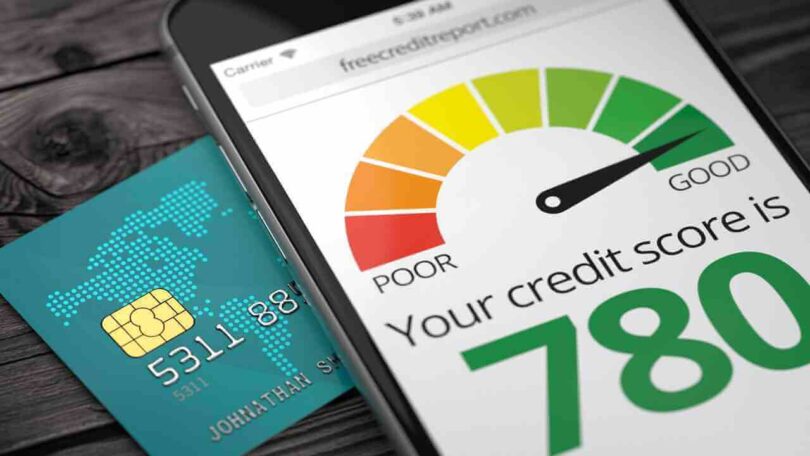
      A credit score is a numerical representation of your creditworthiness, typically ranging from 300 to 850. The higher your score, the more trustworthy you appear to lenders. Credit scores are determined by several key factors:

      • Payment History (35%) – Paying bills on time is the most significant factor in your score.
      • Credit Utilization (30%) – This is the percentage of your available credit that you’re using. Keeping it below 30% is ideal.
      • Length of Credit History (15%) – The longer your credit accounts have been open, the better.
      • Credit Mix (10%) – A diverse mix of credit types, such as credit cards, loans, and mortgages, can boost your score.
      • New Credit Inquiries (10%) – Multiple hard credit inquiries in a short period can lower your score.

      Set Up Automatic Payments

      One of the easiest ways to boost your credit score is by consistently making on-time payments. Since payment history makes up the largest portion of your credit score, even one missed payment can significantly impact it.

      Most banks offer automatic payment options for credit cards, student loans, and utility bills. Setting up auto-pay ensures you never miss a due date, protecting your score and preventing late fees. If you’re hesitant about full auto-pay, consider setting up reminders through your bank’s mobile app.

      Monitor Your Credit Utilization

      Credit utilization refers to how much of your available credit you’re using. Keeping this ratio low—ideally under 30%—can improve your score. Many banks provide tools to track your credit usage in real-time, helping you stay within a healthy limit.

      To lower your credit utilization:

      • Pay down balances before the statement period ends.
      • Request a credit limit increase through your bank (without increasing spending).
      • Spread purchases across multiple cards instead of maxing out one.

      Banks often allow you to set spending alerts, ensuring you stay within an optimal utilization range.

      Use a Secured Credit Card

      For students or individuals with little to no credit history, a secured credit card is a great way to start building credit. Unlike regular credit cards, secured cards require a cash deposit as collateral, reducing the risk for lenders.

      How it works:

      • You deposit an amount (e.g., $500), which becomes your credit limit.
      • You use the card like a normal credit card, making small purchases.
      • Paying the full balance on time each month establishes a positive credit history.

      Over time, responsible use of a secured card can lead to upgrading to an unsecured card, further strengthening your credit profile.

      Open a Credit Builder Loan

      Some banks and credit unions offer credit builder loans, designed specifically for individuals looking to improve their credit scores. Unlike traditional loans, the borrowed money is held in a secured account while you make monthly payments. Once the loan is repaid, you receive the funds.

      Benefits of a credit builder loan:

      • Helps establish a history of on-time payments.
      • Improves your credit mix, which contributes to your score.
      • Builds savings while improving your financial reputation.

      This is an excellent option for students with limited credit history.

      Use a Personal Loan to Consolidate Debt

      If you have multiple high-interest debts, consolidating them into a single personal loan from your bank can simplify your payments and improve your credit score. This strategy offers several benefits, including lower interest rates compared to credit cards, fixed monthly payments that make budgeting easier, and a reduced credit utilization ratio, which can boost your score. Debt consolidation is especially useful for students managing multiple credit cards or personal loans, as it helps streamline finances and create a clear path toward repayment.

      The Road to a Strong Credit Score

      Improving your credit score is a gradual process, but with smart banking strategies, it becomes much easier. By using automatic payments, keeping credit utilization low, responsibly managing credit cards, and leveraging tools like credit builder loans and personal loans, you can steadily build a strong financial foundation.

      Your bank is more than just a place to store money—it’s a valuable partner in your journey to financial independence. Whether you’re just starting out or looking to improve your existing score, these strategies will help you achieve a higher credit score and greater financial stability.

      Take advantage of the resources your bank offers and start building your credit today.

    • How Interest Rates are Created

      Have you ever scrolled through a financial news site, glanced at the rows of bond prices and yields, and wondered how on earth they’re determined in the first place? Have you ever been curious about why a bond’s price goes down when interest rates go up—or vice versa? Well, if so, you are in the right place. If not, bond pricing is one of the most fundamental aspects of fixed-income investing, and it’s important for you to know! Let’s dive into it.


      What Are Bonds, Anyway?

      At the most basic level, a bond is essentially a loan. When you buy a bond, you’re loaning money to a company (corporate bond) or a government (government or municipal bond) for a certain period. In return, the bond issuer promises to pay you interest at regular intervals (known as coupons) and to repay the original amount (the face value or par value) at maturity.

      Bonds have three main characteristics to keep in mind:

      Maturity Date: The specified date on which the issuer repays the face value of the bond.

      Face Value (or Par Value): The amount the bond issuer promises to pay back at the end of the bond’s term. It’s typically stated as $1,000 for corporate bonds in the U.S., though it can vary.

      Coupon Rate: The interest rate the bond pays based on the face value. For instance, if you buy a $1,000 bond with a 5% annual coupon rate, you’ll receive $50 per year in interest payments.


      Why Do Bond Prices Fluctuate?

      If you’ve ever watched the bond market during a financial segment, you may have seen bond prices changing throughout the day. One reason is supply and demand—the same phenomenon that influences stock prices. If many people want to buy a particular bond (i.e., high demand) while very few are selling it (i.e., low supply), the bond’s price can be driven up. Conversely, if there are more sellers than buyers for that bond, the price tends to go down.

      However, supply and demand aren’t the only factors at play. The interest-rate environment also plays a huge role. Bond prices generally move inversely to interest rates. If interest rates in the broader market rise, newly issued bonds will come with higher coupon rates, making older bonds with lower coupon rates less attractive unless their prices drop. On the flip side, if interest rates fall, existing bonds with higher coupons become more attractive, and their prices go up.

      To illustrate this, imagine you hold a bond that pays 5% annually. If interest rates in the market rise to 6%, the newly issued bonds will be more appealing to investors, meaning fewer folks will want your 5% bond. You might have to sell at a lower price (below the face value) to compensate a potential buyer for that lower coupon rate. In contrast, if the market rates fall to 4%, your 5% bond suddenly looks very enticing, and investors might pay more than the face value to get that higher coupon.


      The Order Book for Bonds (Yes, They Have One Too!)

      Much like stocks, bonds also have markets (though usually less centralized) where traders post buy and sell orders. However, the bond market is famously less transparent than the stock market and can be more decentralized. Still, the same logic applies: traders place bids (prices they’re willing to pay) and asks (prices they’re willing to sell at), and the bond actually changes hands when a buyer and seller agree on a price.

      Because bond trades often happen over-the-counter (OTC) rather than on a big public exchange like the NYSE, you won’t always see a single order book on your screen. Instead, you might see indicative quotes from major dealers or electronic trading platforms. Nevertheless, the principle remains: bond prices are set by balancing what buyers are willing to pay and what sellers are willing to accept.


      From Coupon Rate to Yield

      It’s easy to confuse a bond’s coupon rate with its yield, but they aren’t the same thing. As mentioned earlier, the coupon is the fixed percentage of the bond’s face value you receive annually, whereas the yield is how much you actually earn on the amount of money you spent to buy the bond.

      If you purchase a bond at face value (say, $1,000) and the coupon is 5%, you’ll receive $50 per year. Your yield would also be 5% because you’re earning $50 on $1,000. But, if you buy that same bond below face value—let’s say you only pay $900 for it—your yield rises. You’re still receiving $50 in annual coupon payments, but now on a $900 investment. This makes your annual yield higher than 5%. If you buy it above face value (perhaps $1,050), your yield will be lower than the stated coupon rate.


      Yield to Maturity (YTM)

      When analysts quote a bond yield, they’re often referring to something called Yield to Maturity (YTM). Yield to Maturity is a more comprehensive measure of return that takes into account:

      1. All coupon payments you’ll receive until maturity.
      2. Any capital gain or loss you’ll realize if you buy the bond at a discount or premium and then hold it until it matures at par value.
      3. The time value of money, meaning coupon payments in the near term are worth more than coupon payments far in the future.

      The math for YTM can be a bit involved, often requiring either a financial calculator or a spreadsheet to compute. But here’s the main takeaway: YTM is the “true” annualized rate of return if you hold the bond until maturity and reinvest the coupon payments at the same rate.


      Risk Factors and Credit Ratings

      Bonds are often considered safer investments than stocks, but they aren’t risk-free. Two main risks you’ll see in the bond market are:

      1. Interest Rate Risk: The risk that interest rates will rise, causing bond prices to fall (if you need to sell before maturity).
      2. Credit Risk (Default Risk): The risk that the issuer won’t be able to make its scheduled interest payments or repay the principal at maturity.

      To help gauge how likely a default might be, credit rating agencies like Standard & Poor’s, Moody’s, and Fitch assign credit ratings. High-quality bonds (AAA or AA) are less likely to default and usually pay lower yields. Lower-rated bonds (like BB or B, sometimes called “junk bonds”) pay higher yields to compensate investors for the higher risk of default.


      The Yield Curve

      One of the key visuals you’ll see when talking about bonds is the yield curve, which is a chart that shows yields on bonds of similar credit quality across different maturities. The U.S. Treasury yield curve is the most commonly referenced because Treasury securities are considered low-risk and help set a benchmark for other types of bonds.

      Typical yield curves can be:

      Flat: Yields are similar across maturities (often signals a period of transition in the market).

      Normal: Longer-term bonds have higher yields than shorter-term bonds (often signals a healthy, growing economy).

      Inverted: Short-term bond yields are higher than long-term bond yields (often signals economic uncertainty or a potential recession).


      Bringing It All Together

      So, let’s connect the dots: bond prices are influenced by factors like supply and demand, overall interest rates, and the issuer’s creditworthiness. Those prices, combined with the coupon payments, determine bond yields—the all-important measure of how much you actually earn as an investor.

      If demand for a particular bond is high, its price will likely increase, lowering its yield.

      If market interest rates rise, bond prices tend to fall to stay competitive.

      If the issuer’s credit rating improves, its bond prices tend to rise and yields fall.


      Why Does This Matter to You?

      Whether you’re an aspiring investor eyeing fixed-income as part of a balanced portfolio or just someone wanting to understand the fundamentals of finance, learning the basics of bond pricing and yields can open the door to more advanced topics, like building an income ladder or hedging interest rate risk. Bonds can offer stable income and a counterbalance to the volatility in your stock holdings. By understanding how bonds are priced and how yields work, you’ll be better equipped to decide which bonds suit your investing goals and risk tolerance.


      Now you know the basics of bond pricing and yields! You’ve just uncovered one of the pillars of fixed-income investing and taken a significant step in your journey to master the mechanics of money. Whether you choose to stick to safer government bonds or dabble in high-yield corporate bonds, always remember that understanding the interplay between price and yield will guide your decisions—and hopefully help you make more informed choices for your portfolio.

      If you ever see those small numbers in red or green on a bond screen—remember, they’re more than just random flickers on a ticker. They are the reflection of market forces like interest rates, credit ratings, and investor sentiment dancing in real time. Happy investing!
    Is this your new site? Log in to activate admin features and dismiss this message
    Log In